May 3, 2026 · 3 min read
The cost of lost context
The problem isn't missing information. It's turning it into something actionable.
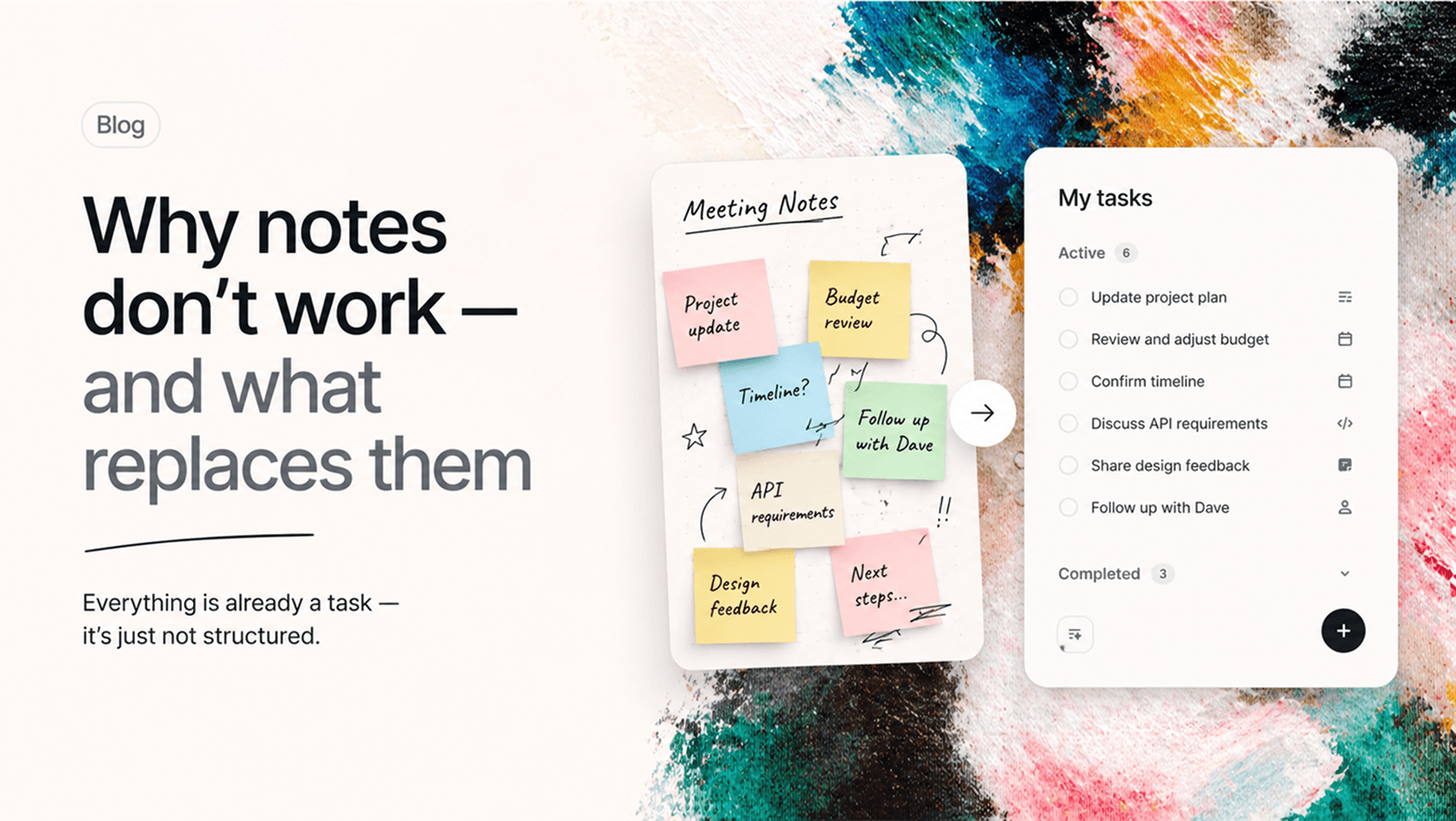
Lost context rarely looks dramatic. It looks like a small pause before answering a customer. It looks like rereading a thread before a meeting. It looks like asking a teammate to resend something they already shared.
Each moment is easy to ignore. Together, they become the hidden tax on modern work.
Information is not the bottleneck
Most teams already have enough information. The issue is that it is scattered across calendars, calls, documents, chats, inboxes, and task trackers. Search helps when you know exactly what you need. Work is harder when you only remember part of the story.
People compensate by building personal systems: pinned messages, private docs, copied links, screenshots, and manual reminders. These systems work until they do not. They depend on one person having time to maintain them.
Context should travel
The useful version of context is not a folder of artifacts. It is the right detail appearing next to the next action.
When a follow-up task is created, the decision that caused it should come with it. When a meeting starts, the unresolved work from the last conversation should already be visible. When a customer writes back, the relevant promises and blockers should be in reach.
That is what makes a system feel effortless. It does not just store information. It carries context forward.